

Dear Editor,
The Atlantic’s recent article, “When Mentally Ill Teenagers Ask to Be Put to Death,” brings needed attention to the profound and often misunderstood suffering caused by obsessive compulsive disorder (OCD). As the story illustrates, OCD can be severe, chronic, and life-threatening — so much so that individuals with OCD are at significantly elevated risk of suicide.
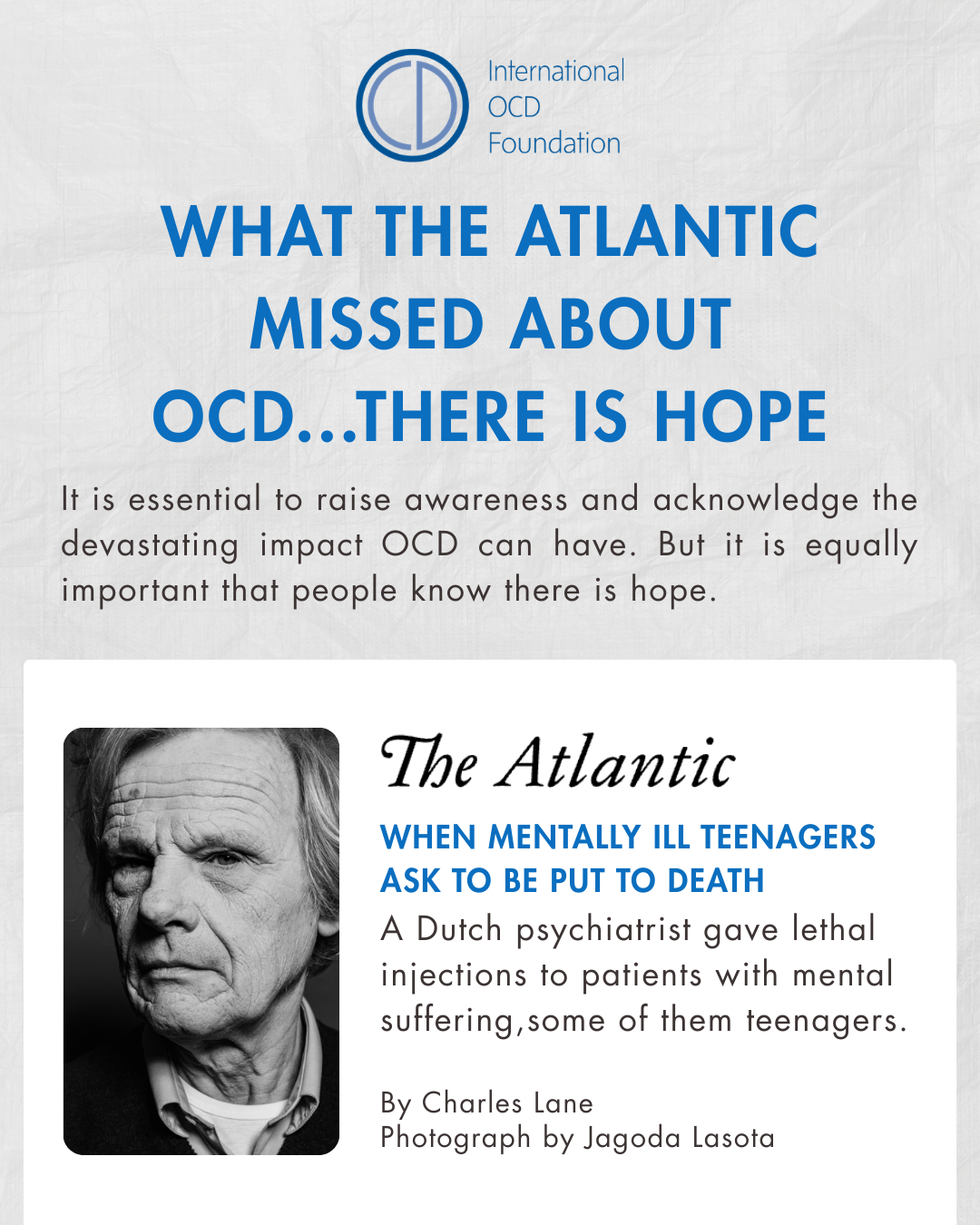
However, what is missing from this important conversation is an equally critical truth: effective, evidence-based treatments for OCD exist. Unfortunately, even after years in care, up to 98% of people never receive the many first, second, and third-line approaches that are available due to systemic breakdowns in proper screening, diagnosis, referral, and access to specialized care.
With appropriate care, many individuals who once felt trapped by their symptoms are able to reclaim their lives, pursue their goals, and thrive. At the International OCD Foundation, we regularly hear from people affected by OCD who have gone from a place of despair to one of hope because they were able to access evidence-based treatment, specifically Exposure and Response Prevention therapy (ERP).
It is essential to raise awareness and acknowledge the devastating impact OCD can have. But it is equally important that people know there is hope. The tragic outcomes outlined in “When Mentally Ill Teenagers Ask to be Put To Death” are not inevitable. With continued efforts on raising accurate awareness of OCD and strengthening our systems of care around the globe, more people with OCD can access the effective, life-saving treatment they deserve.
For those seeking help, resources and treatment guidance are available at iocdf.org.

Leave a Reply