
By Kjersti and Jayden Helberg
Jayden's Story
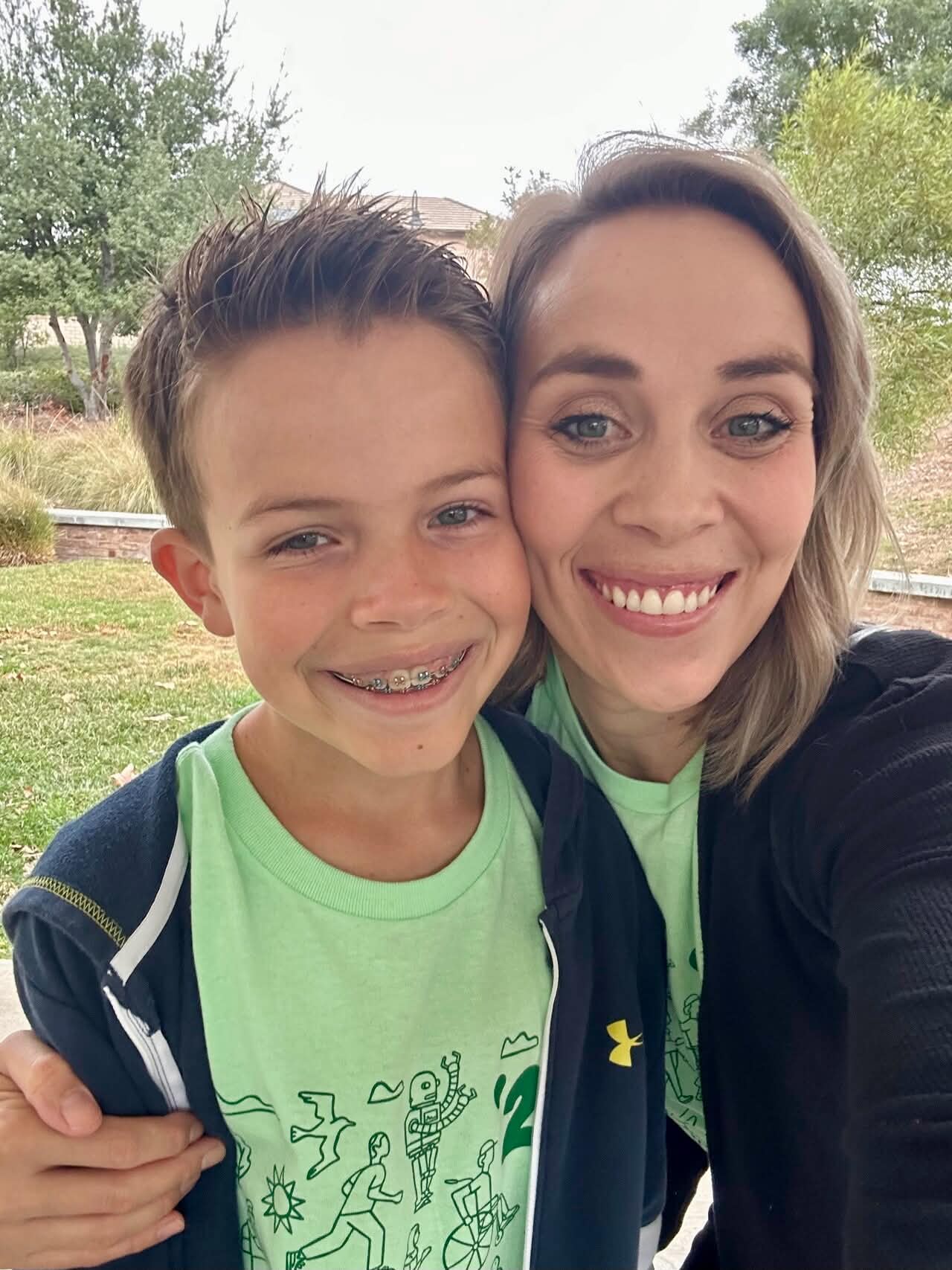
It has been almost 7 years since I was diagnosed with OCD. When I was 7 years old I started having a lot of fears about getting the stomach flu. Because of this, my stomach would hurt at night. I would have a hard time falling asleep for fear of waking up with throw up all around me. Over time, because of the worry, my stomach also hurt all day long. This made it so I couldn’t focus or have fun a lot of the time, with the constant stomachache and worry. My parents knew my stomach was always hurting, and I remember my mom taking me to a few doctors and doing tests to try to find out why. I was also avoiding my siblings because I thought they would get me sick too. I started asking questions all the time about that and anything else that worried me, it felt like hundreds of questions every day. I didn’t know my parents were doing a lot of things behind the scenes to try to find out what was going on.
One day, my parents sat down with me and told me they thought they knew why I was having so many worries. They showed me a video about what OCD was to help me understand. We compiled a list together of all the things I was worried about. The list was long and included: the stomach flu, poison, doing things wrong, being a bad person etc. I was relieved that they thought we knew why I was worrying so much.
So, my parents found me a therapist. Her name was Dr. Michelle Witkin. She taught me about OCD. She taught me that I could get better. She showed me strategies to fight my OCD, like: delaying compulsions or doing the opposite. Then she taught me how to do exposure therapy. After working on some of my less intense fears, we tackled the stomach flu. As I did exposure therapy, I learned that I could be uncomfortable, ignore the urge to do my compulsions, and still do the things I wanted, like sleeping and playing with my siblings! The biggest exposure we did was exposing me to fake throw-up that I thought was real. We had it all around the house so I would see it all day long. I hated it at first because I thought it would make me sick, but over time I got more comfortable with it being around though it was (and still is) a bit gross. My final exposure was sticking my hand in a bowl of the throw up and getting my cars out. I remember that was really hard and I was scared but I also remember that I was so proud of myself! I wasn’t afraid anymore!
Being a kid with OCD was hard. Before I was diagnosed, I was scared a lot because I had so many intrusive thoughts throughout the day. Now, 7 years later, I am a teenager with OCD and fortunately it isn’t a very big part of my life. It is mostly little things that come up and when they do, I can just use the tools I have learned right away so I don’t get stuck. It is easy to recognize my OCD now. I have also learned that I can do mostly anything now and not a lot stops me! If I could do all those hard things to recover from OCD, then I can do anything! My favorite phrase my therapist taught me was, “You can’t be brave without being scared first.” I know I can get past hard things. I’ve learned I can “do it scared.” I want to help people know what OCD really is, and that getting help as a kid changed my life for the better. I hope that everyone who reads this and is fighting OCD will know that you can do it and should never give up even when it is hard.
Kjersti's Story
My son was 7 years old. Every day and night he had stomach pain. He would stay up for hours and could not fall asleep because his stomach was hurting so badly. We went to the pediatrician, we saw a gastroenterologist, we paid for test after test. They all came back normal. Nothing could explain his stomach pain. The pain continued and we continued to be at a loss. Then, he started asking us if he was going to throw up, asking if something was poison, asking if a song he had in his head was bad, asking if what he said was okay, if what he thought was okay, if what he did was okay, asking us if he was bad. Again, and again the questions came and nothing I said seemed to give him any lasting comfort. He was avoiding his siblings at any sign of stomach upset, for fear they would get him sick. Our carefree little boy was suddenly filled with endless worry. Long days of reassurance seeking (a term we would soon learn) were followed by sleepless nights.
Our pediatrician suggested he should see someone for anxiety. I called a local therapist and told him what was happening. The therapist said to me something I never thought I would hear, “I think your son has OCD. You should really try to find an OCD specialist to help you.” I didn’t understand. Isn’t OCD a cleanliness thing? Hand washing? Organizing stuff? He doesn’t do any of that. So, we researched it and learned we had been very wrong about what we thought OCD was. It was so much more than we realized and sounded like just what our son was struggling with. We signed up for Natasha Daniels course to learn all that we could. We learned words that week like reassurance seeking, accommodation, compulsion. We learned that OCD has many subtypes. We learned that there was hope for recovery. Hope for our son to not be stuck and held captive by his worries anymore. Finally we had hope.
We sat down with our son to tell him we thought he had OCD. He seemed to understand and was willing to start trying some things we had learned. Once we started seeing a trained OCD therapist (Michelle Witkin) that was when everything changed. She trained us in how to reduce family accommodation and respond to his OCD in a different way. She helped us learn the language to be loving but not reassuring. She taught him how to reduce compulsions and fight back by using ERP and other strategies. She gave us a toolbox that we still use today and will continue to use throughout our lives. OCD Treatment was invaluable and gave our son his childhood back. It still breaks my heart that it took months to find out what my son was going through. Months that could have been used for the correct treatment, if only our pediatrician knew what OCD was. If only WE knew what OCD was. It is not lost on me that we were the lucky ones because it only took months. Unfortunately, for so many, it can take years upon years of incorrect treatment before receiving a diagnosis. For some, they never receive it.
It is my hope that every child who is suffering from OCD can find access to the correct treatment. That they can learn to apply the tools to fight OCD and reclaim their childhoods, and in turn their lives. To live the life they want on their own terms and not on the terms of their OCD.
While every experience with OCD is different, far too many kids and families face the same barriers to getting answers and effective treatment. See what new IOCDF findings reveal about pediatric OCD care—and what we can do to change it—in Losing Childhood to America’s OCD Care Crisis.

Leave a Reply