
A new landmark study by the International OCD Foundation finds that millions of Americans living with obsessive compulsive disorder (OCD) are not receiving care that could help them reclaim their lives.
Up to 10 million Americans live with OCD, yet only one in six receive a correct diagnosis. As a result, 95% of people in the U.S. with OCD do not receive the most effective treatment, despite strong evidence that specialized therapy can significantly reduce symptoms and restore daily functioning.
These findings represent the real-life struggles that individuals with OCD face daily when trying to get an accurate diagnosis and access effective treatment.
In this blog series, three IOCDF Advocates bravely share their experiences to shed light on the IOCDF’s recent findings.
-
By Chris Trondsen
As a kid, I was always labeled a ‘problem child’—stubborn, demanding, headstrong, and pushy until I got my way. Little did the adults who gave me this label know, I was struggling internally. I feared negative outcomes, or bad things happening to myself and my family, and I felt driven by an internal force commanding me to follow orders to completion to experience feelings of safety.
I started experiencing symptoms of OCD as young as two years old, needing to line up my toy cars in straight and measured lines, making sure they were exactly a thumb's space apart and not out of order. Yellow was a safe color for me, and if I saw something I wanted in yellow, I’d scream and demand it to feel safe. I hated the feeling of the tags on my clothes against my skin, so I preferred to wear the same ‘safe’ outfit every day because it felt calming.
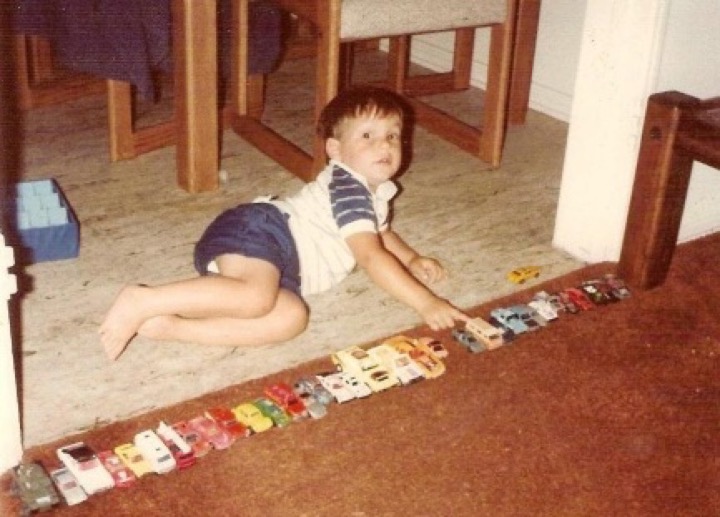
Countless teachers, administrators, and doctors failed to make the proper diagnosis of these behaviors. Instead, difficult, impulsive, and talkative were just some of the adjectives used to describe me as a child, when instead three letters would’ve started my healing journey sooner—OCD. Yet none of the school personnel ever knew what to look for to diagnose me with the condition, and therefore, I never received the proper diagnosis.
As I got older and went through high school, a lot of my anxiety from OCD turned into anger. I often lashed out and even got disciplined at school multiple times. Once again, school counselors missed the diagnosis completely, and when I got in trouble, I was required to go to anger management as a result. I worked with multiple licensed mental health professionals who shrugged my problems off as impulsive disorders, oppositional behavior, and anger.
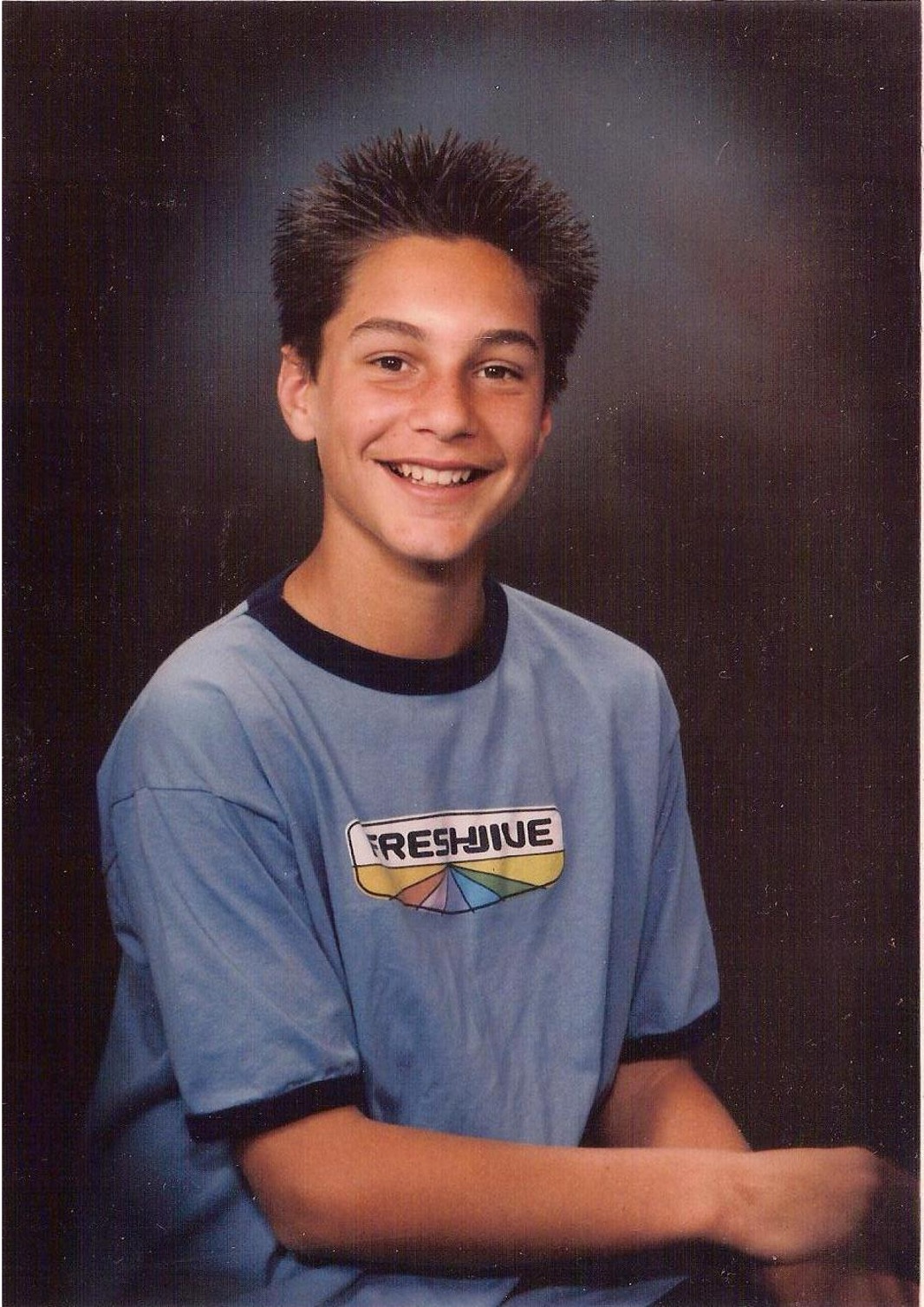
After years of undiagnosed OCD, the obsessions and compulsions led me to be housebound, isolated, and eventually led to a suicide attempt. When hospitalized, I was put in front of more medical professionals and licensed clinicians. I often received diagnosis that included some form of anxiety or depression. Additionally, I was erroneously diagnosed as having some psychosis or schizophrenic disorder when I tried to describe to mental health professionals that I was having intrusive thoughts that were bothersome and that I wanted to go away. I got labeled as having ADHD because I described a difficulty in concentrating, with the real culprit being OCD, making it difficult to focus because my brain was constantly scanning for danger and hypervigilant, and this did not allow me to pay attention to anything else.
Change came after reading a brief article about OCD in a magazine at the checkout stand of a grocery store that I’d visit at three in the morning to buy cleaning products, since it was less crowded. I’d compulsively use these products to clean my house. The article described three ways you may know you have obsessive-compulsive disorder. A light bulb went off. My mom and I changed tactics, and instead of looking for a general therapist, we started looking for a clinician who specializes in treating OCD. After calling nearly 100 clinicians covered by my insurance, I received only about 10 callbacks. So, after 90 ignored my call, 5 of those that did call back expressed that they didn’t know how to treat OCD, so one-by-one we went through the five remaining providers, claiming they could treat my symptoms.
I was advised to explore my childhood by one therapist, another told me to think of the beach anytime I had a bad thought, and one of them said that I looked perfectly normal and handsome, so there’s no way I could have OCD. One must’ve been so ineffective because I can’t even remember them, but we finally landed on, as he described himself, the “OCD expert of the area.” Upon telling my parents and me that I was the worst case of OCD he had ever seen, that it would take about 4 years for him to help get me just a small amount of relief, and telling my parents that they should expect to have me live with them and take care of me for life because I could never work—we began treatment.
Additionally, I saw a psychiatrist whom he recommended. The psychiatrist spent less than 5 minutes with me, told me to get on a medication, and then diagnosed me with Tourette’s, when in reality, I was shifting my eyes and my body so much to even them out because I had “just right” OCD and needed to feel balanced once sitting down in this office. So, I was misdiagnosed once again.
The “OCD expert” my family had come to put their hope in brought my parents into the session one day, and there was a discussion about my sexual orientation. Suddenly, in session, obsessions and compulsions were linked to my sexual orientation being repressed because I was not openly gay. This went on for about a year and a half of my life.

It wasn’t until my mom, my biggest supporter, landed on the International OCD Foundation's website. She went on to search for a provider in our area, found one about two hours away, and reached out. After connecting with this clinician, Karen Pickett, LMFT, and attending the first session, it felt as if someone had finally described what I was experiencing in life. She understood the disorder, was able to understand what I was going through, and we began treatment.
I’m now in full recovery from OCD, and I’ve gone full circle to now treat others with the condition, largely inspired to do so from my own experience with misdiagnosis and ineffective treatment. Upon reflection, after showing signs of OCD at age 2, I didn’t receive an actual diagnosis until I was 21 years old. In 19 years, I had seen countless teachers, administrators, school psychologists, counselors, therapists, and medical professionals, and it took 19 years to receive an official OCD diagnosis and effective treatment.


Often, I wonder what life could’ve been like for me if someone had caught it early and I had received treatment when I was much younger. Meaning, I was able to live those “lost” years free from OCD and in the recovery that I now experience instead.
It is essential that we, as a nation, start to recognize that my story is not unique. Countless people are suffering from this disorder that will never receive an official diagnosis, and even more that will never receive frontline, effective treatments. The 19 years I experienced loss, confusion, frustration, and a lack of treatment are what many will experience for their entire life if something doesn’t change so that more people receive a diagnosis and effective care. There is an OCD Care Crisis, and it is time we took that crisis seriously.

Thank you to Chris and iocdf for publishing. We have a family member experiencing same. They’ve been through therapy, including meds but claim neither are helping. Now trying to live on their own for the first time, symptoms are worsening and it’s very scary. All of their income is going to rent, utilities and food with nothing to spare. How does one get help without appropriate means?
Desperate for help in northern IL.
You and your mom are heroes. Thank you for sharing your story! it was so great you kept perservering and are now helping others.
What a story, Chris! Thank you for sharing! Thank you for all you do to raise awareness, treat, and educate. I SO wish you could treat my son!
Sounds alot like my son..did you also have bdd?
Im sure this is not where i should be contacting. I don’t know who to contact. Iam an 80 year old female clutterler/hoarder.i am extremely depressed and cry daily. I cannot continue to live like this. I hate myself for letting this happen. I need help. I have seen many therapists over the past 10 years. No one had hoarding experience and could not help me with my issues. I am desperate to find both physical help (to help me clean), and need mental help. My insurance is Aetna Medicare. I don’t know where to turn. I cry almost constantly. My only income is social security. Please help me.