
By Boris Litvin, MA, Matthew Riello, Andrew Marshall, PhD, Emily Rodriguez, MS, MSc, Martha Falkenstein, PhD, and Alexander Rosenberg

One word appears more and more in the news surrounding mental health research (and the IOCDF Newsletter and blog): “genomics”. What does it mean, and why is it such a hot topic lately for both scientists and non-scientists? In the context of OCD research, genomics refers to the study of a person’s genome (all of a person’s genes) to gain insight into how OCD appears and develops.
Genomic studies of OCD over the past two decades have contributed significantly to our understanding of how OCD works. However, there remains more to be done and explored, for OCD as well as for other psychiatric conditions.
With support from a five-year grant by the National Institutes of Health (NIH), researchers at the Mount Sinai School of Medicine (New York, NY), Baylor College of Medicine (Houston, TX) and University of North Carolina at Chapel Hill (UNC) (Chapel Hill, NC) have launched the Black Equality in OCD NeuroGenomics (BELONG) study, a research project that looks specifically at the genomes of Black and African Americans with OCD and their families. BELONG aims to contribute to OCD research from multiple perspectives: first, enhancing our overall understanding of OCD genomics, second, achieving a deeper grasp of OCD risk by adding more participants, and, third, gaining more reliable insight into OCD risk by leveraging the power of human diversity.
For the first point, the lead investigator of the BELONG study, together with Dr. Sidney Hankerson, Mount Sinai’s Dorothy Grice, MD, explained: “We know that there are gene variants that significantly increase risk for OCD. When are those genes active developmentally? Can we understand more about where those gene products function in the brain? What part of the brain? What works in partnership with that part of the brain in terms of brain circuitry?”
For the second, Grice added, “Progress in OCD research has been limited by smaller sample sizes compared to other psychiatric conditions, for example, in 2018, there were samples from 130,000 individuals with major depression, about 60,000 individuals with schizophrenia and 20,000 individuals with bipolar disorder and fewer than 3,000 samples from individuals with OCD. These numbers have grown significantly since 2018, but OCD continues to be underrepresented in genetic research. Increasing the sample sizes has tremendous potential to advance our understanding of OCD genetics.”
Third, according to Grice, much of OCD research has mostly involved individuals with European ancestry: “Thinking about OCD and Black Americans, the prevalence is not any different. So it's not because it doesn't happen in other cohorts or populations — it's because those individuals are not being included or not participating for a variety of reasons. So one motivation for our study is to try to get studies in OCD to reflect the real world and the population that's out there.” Dr. Grice added, “This is a powerful tool to understand the genomics of OCD across all of human ancestry.”

Dorothy Grice, MD (Mt. Sinai School of Medicine)
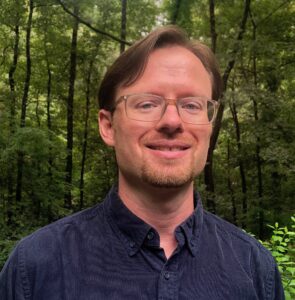
James Crowley, PhD (University of North Carolina, Chapel Hill)
Bridging Gaps
The number of people participating in OCD genomic studies has grown significantly over the past ten years, which was partly due to the emergence of the international Psychiatric Genomics Consortium (PGC) in 2007. However, the lack of diversity persisted, even for research published by PGC scientists. “This past year, the largest genomewide association study ever was published, with over 53,000 individuals with OCD (Strom et al., 2025),” said Baylor’s Eric Storch, PhD. “Despite all its strengths, virtually no one within the sample was of any sort of racial or ethnic diversity. When you start modeling effects of genetic composition on things like predicting treatment response, it doesn't represent the beautiful diversity of our world.” Storch continued, “With such a lack, that really has a risk of creating a health disparity where many individuals that comprise our world would not be represented, or not benefit from those discoveries.”
“Humans came out of Africa,” noted UNC’s James Crowley, PhD. “If all of our genetic diversity goes back to Africa, and you focus just on individuals of European ancestry, you are only looking at a fraction of all the genetic diversity on the planet. There have been a lot of initiatives to include genetic data from individuals of African ancestry, and they have not been as successful as we would like. There are systemic barriers to access to assessment, treatment and biomedical research. We have an opportunity in this study to advance biomedical research in the African American community.”
Grice noted that, for Black Americans, “There's a lot of hesitancy to participate in research studies, given the tragic history in that regard. In addition, we know that there's a much higher rate of misdiagnosis in Black Americans. People may present with what may be OCD, but there are higher rates of being misdiagnosed as having anxiety or psychosis, even to the point of being inappropriately hospitalized compared to other groups.”
The BELONG team is hopeful that their efforts will contribute to the comparatively small amount of research on OCD in Black Americans. Baylor’s Ogechi “Cynthia” Onyeka, PhD, remarked, “With regards to understanding symptom presentation and expression, the literature on what OCD looks like in the Black community is very limited and restricted to a group of papers that were written 10-15 years ago. We are really excited to pick up where that limited literature has left off and not only understand what some of the symptom dimensions are that might be more prevalent, but also build upon that and get more information out to individuals who might think they have OCD to help support treatment awareness and engagement too.”

Eric Storch, PhD (Baylor College of Medicine)

Ogechi "Cynthia" Onyeka, PhD (Baylor College of Medicine)
How BELONG Contributes to Science
How would genomics research contribute to knowledge of OCD, and further advances in treatment? Grice explained, “We're focusing on rare genetic variation, and particularly de novo variation— which indicates a new, spontaneous genetic change that occurs randomly very early in embryonic development.”
To understand the role of de novo variation, BELONG invites not only Black Americans with OCD to participate, but also their family members, with a goal of at least 1,250 participants by the end of the study. The process for participating in BELONG is fairly simple, and anyone in the US can take part. Storch explained, “Go to our website (https://belongocd.com/), or email one of us. From there it's a simple interview and mailing us a saliva sample via a kit that we provide. We also provide some compensation to participants for their time and effort.”
Naturally, concerns about the safety of DNA collection and storage can arise. “There's a lot of oversight and attention to ensure our study is compliant with all the current ethical and confidentiality rules that are in place on every level,” Grice said. Crowley added, “First: there's no for-profit institution involved in any of this research. Second: we remove all identifiers, like name, birthplace, and date of birth. All of that information is stripped from any of the genetic data. Third: the way that we work with the data is very controlled and regulated by each institution’s ethical review board.”
Importantly, this security extends to research conducted by future researchers who may access the data for years to come. The BELONG team adheres to strict federal and institutional standards to promote the safety of participants. Like many studies funded by the NIH, BELONG data will be available for future research. “With the consent of each participant, we share their anonymous information with NIH because NIH has a data repository available to other vetted and qualified researchers who can extend our work,” Grice specified. “The participants are doing so much for our study and if a researcher comes along in ten years with a great new idea that can benefit the field, they can apply to use this information. Every participant in BELONG is advancing knowledge of OCD today and in the future. And that's fantastic.”
It all comes back to the participants. “We try to answer questions, make sure people feel comfortable about participating — that's all a part of the informed consent process, to make sure that all the questions are answered about why we're doing this study, what the study entails and how the participants are protected, before they actually get into the study. We want people to understand what it's all about and make sure they have the knowledge that they need to make an informed decision about whether they want to join or not,” said Grice.
Beyond BELONG
While the BELONG study highlights and addresses major gaps in both genomics and OCD research, it is important to be mindful that all research has limitations, especially with the interpretation and extrapolation of data. Fellow scientists and clinicians like Sonya Faber, PhD, at the University of Ottawa warned that the results of genetic research could be misconstrued to “reinforce scientific racism and biological determinism, rather than addressing the structural and psychosocial contributors to mental health disparities.” Faber also noted that racially-based genetic studies could “risk excluding or misclassifying participants of mixed ancestry—who often face the same structural barriers but may be excluded for not fitting a clean racial “genetic” category". Grice notes that African Americans are overwhelmingly of mixed ancestry and hence the BELONG study is in a unique position to address these risks. Similarly, Emory University School of Medicine’s Donovan Ellis, PhD, expressed, “[We want] to be mindful that we're not reifying race science-based conclusions, or coming to the types of conclusions that unintentionally further marginalize communities, or be overly narrow”.
Both Faber and Ellis asserted that genetic risk factors for psychological disorders are not tied to race. Citing genetic research into schizophrenia, Faber explained, “Although there are now genes associated with the risk of developing schizophrenia, these do not directly correspond to higher risk by race, as race is a sociopolitical and not a genetic classification” (Faber et al., 2023). “This logic applies equally to OCD,” she stated.
Emory University clinical psychologist Joya Hampton-Anderson, PhD, suggested that this important study should ensure to carefully consider the cultural context and historical stigma associated with medical research and minority groups: “I think the alignment with the community is going to be really important with something like saliva samples being taken. There is a lot of historical mistrust in the Black community around medicine, broadly defined, but also research, and that is a very intimate data collection method.”
With these concerns in mind, Faber described how epigenetic factors may play a role in linking genetics with OCD. Epigenetics refers to how one’s behavior or environment can impact and interact with their own genome. “Since belonging to a certain race corresponds to an environmental risk of poor mental health (i.e., social disadvantage)...an association between race and [mental disorders] may be expected to be observed,” said Faber; these risks may include “chronic exposure to racism, discrimination-related stress, intergenerational trauma, and environmental adversity (housing, pollution, policing, poverty)”. Faber continued, “Epigenetics provides a far more accurate and justice-consistent framework for understanding why racially minoritized groups may show different biological profiles—without invoking race as a proxy for genetic difference”.
Faber concluded citing Bryant et al. (2022) “While ethnicity allows individuals the agency to self-define through shared culture and ancestry, race is an artificial category externally imposed to rank and divide human variation. Decades of genetic data confirm that race is not a proxy for genetics, but rather a proxy for the impacts of structural racism”.
Advancing OCD Research, One Saliva Sample at a Time
The BELONG researchers have acknowledged these concerns head-on. Regarding potentially reinforcing biological determinism, Grice explained, “We're not thinking there will be different genes involved compared to other ancestries, but given all the ancestral population changes and genetics, there probably will be different genetic variants within a particular gene, which will help us to learn more about the biology of OCD, because not all genetic variation actually leads to a problem”. In fact, Grice notes that other ongoing psychiatric genetic studies in autism and schizophrenia that also focus on rare de novo variation do not show evidence for different biological profiles across different ancestries, so there is good reason to think these issues will be moot in BELONG.
Grice also clarified: “This study is focusing on genetics which plays a very important role in risk for OCD, and while there are also important non-genetic or environmental factors, those are not a focus of this particular study. We're not saying it's all genetic, but that is what we're focusing on in BELONG”.
Recognizing the complex history of medical research involving minority communities, Onyeka reiterated that “We have a community advisory board that we've been working with, with different clinicians who are Black who work within this space in terms of providing treatment and therapy, and getting feedback from folks who are on the ground and actually engaging with these patients has also been helpful too”.
Despite genetics being the focus of the study, Onyeka mentioned that working directly with minority communities can provide insight into the environmental factors that shape OCD “I think one thing that I'm really excited about is the phenotypic component of this study. In addition to getting a really good assessment of OCD with the participants, we're also getting a lot of different perspectives about different socioecological factors that might be related to OCD. Things like ethnic identity membership and awareness of treatment of symptoms and other things that, with a large sample, we hope to obtain”.
Jordan Cattie, PhD, of Emory University School of Medicine expressed, “Researchers can build trust by using approachable, clear, and informative language about how a study can help, or is different from previous work. For example, this study team shared that (in both existing genetics and OCD treatment studies) there is significant underrepresentation of Black Americans, which makes representation a really important priority. This study team is unique in including a community advisory board that focuses on how to make research helpful for communities, as well as health equity researchers.”
Many researchers and clinicians remain hopeful about the prospects of this research and understand its importance in expanding the knowledge of OCD risk.
“Ultimately, BELONG represents a unique research study that goes beyond the laboratory. This research is really grounded in altruism,” said Onyeka. “It's a one-time experience for the participant — to be able to meet for the assessment, get an understanding of what OCD looks like for them, have the validation of talking to somebody about their symptoms, which can be really validating and helpful and affirming, and then participate with regards to the genetic component. But the dividends of that participation go far beyond what we can even operationalize or quantify right now, which is something that's really incredible and not something that you see a lot with research in the Black community. I think just what makes this study really unique is how far your participation can go.”
References
Bryant, B. E., Jordan, A., & Clark, U. S. (2022). Race as a Social Construct in Psychiatry Research and Practice. JAMA psychiatry, 79(2), 93–94. https://doi.org/10.1001/jamapsychiatry.2021.2877
Faber, S. C., Khanna Roy, A., Michaels, T. I., & Williams, M. T. (2023). The weaponization of medicine: Early psychosis in the Black community and the need for racially informed mental healthcare. Frontiers in psychiatry, 14, 1098292. https://doi.org/10.3389/fpsyt.2023.1098292
Strom, N.I., Gerring, Z.F., Galimberti, M., Yu, D., Halvorsen, M.W., Abdellaoui, A., Rodriguez-Fontenla, C., Sealock, J.M., Bigdeli, T., Coleman, J.R., Mahjani, B., Thorp, J.G., Bey, K., Burton, C.L., Luykx, J.J., Zai, G., Alemany, S., Andre, C., Askland, K.D., Bäckman, J., … Mattheisen, M. (2025). Genome-wide analyses identify 30 loci associated with obsessive-compulsive disorder. Nature Genetics, 57(6), 1389–1401. https://doi.org/10.1038/s41588-025-02189-z

Leave a Reply