
OCD affects people in every community, but many Black people live with OCD for years without realizing that what they’re experiencing has a name, or that help exists.
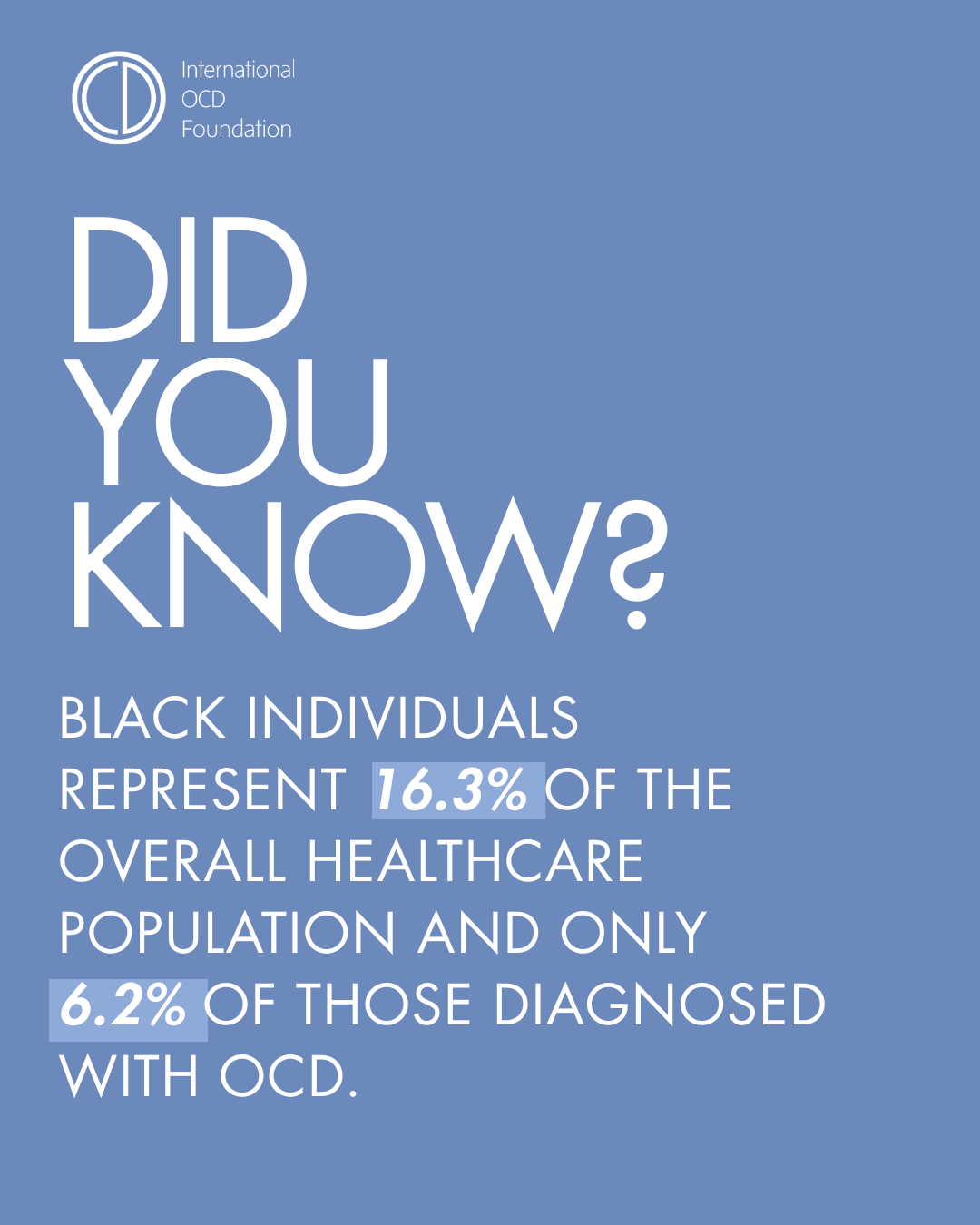
Research shows that African Americans experience OCD at the same rates as white people and other people of color, yet are far less likely to receive treatment or specialized care. As mental health awareness is gaining ground in the Black communities, the IOCDF affirms its commitment to honoring the voices, experiences, and strength of Black individuals living with OCD, along with the clinicians, researchers, and loved ones working to break down barriers to care.
OCD doesn’t always look like what we see in movies or on social media. It can show up as constant “what if” thoughts, fear of harming someone even when you never would, intense worries about contamination or cleanliness, repeating prayers or mental rituals to feel “right,” checking things over and over, or feeling stuck in doubt, guilt, or shame. For many people, these thoughts are frightening—and deeply private.
If any part of this sounds familiar, know this: you are not weak, broken, or alone—and support is available.
Quick OCD Resources for our Black Community Members
Our Commitment to Communities of Color
The BTTI for Treating OCD in Communities of Color is an annual training program specifically designed for BIPOC clinicians and led by BIPOC faculty. Under the guidance of renowned experts Dr. Monnica Williams and Dr. Jenny Yip, this program offers culturally tailored education and hands-on training to help clinicians provide the best care for diverse populations.
- Past Locations:
- 2022: Washington, D.C.
- 2023: Atlanta, GA
- 2024: Oakland, CA
- 2025: Memphis, TN
- 2026: Location TBD, September 25–27
Understanding and Treating Obsessive-Compulsive Disorder in Diverse Populations
OCD is often misunderstood, and within the Black community, cultural stigma and systemic barriers can make accessing care even more challenging. Dr. Jada Carter, PsyD, explores these dynamics in her insightful blog post:
"OCD is a debilitating mental health condition characterized by distressing obsessions and repetitive compulsions that interfere with daily functioning. Misunderstandings about OCD, compounded by cultural stigma, often lead to underdiagnosis or misdiagnosis within Black communities."
Dr. Carter also discusses the gold-standard treatment for OCD, Exposure and Response Prevention (ERP), and how culturally responsive adaptations are essential for addressing the needs of diverse populations.
Take Action and Join the IOCDF Community
Representation Matters – Join a Special Interest Group
Many Black individuals with OCD delay seeking help for OCD due to misjudging the symptoms. This is where joining a Special Interest Group (SIGs) comes in. Special Interest Groups bring together people committed to improving understanding, research, and treatment for OCD and related disorders. Take a look at our established SIGs or you can create your own group.
Become a Grassroots Advocate – Because Silence Shouldn’t Be the Default
Grassroots advocacy helps by raising awareness, reducing stigma, and making it easier for people to recognize OCD and seek support—in families, faith communities, schools, and healthcare settings. Become an advocate and a champion for Black people with OCD within our community.
Overcoming OCD, Together
For many Black adults with OCD, the hardest part isn’t just the symptoms—it’s not knowing what’s happening or believing they have to manage it alone. The International OCD Foundation is working to change that through education, research, and community connection. Black individuals and families deserve to know what OCD can look like, where to find help, and that effective treatment exists.
Whether you’re here to learn, connect, or take a next step, we’re glad you’re here.
Find More Resources from Our Partners
Together, we’re advancing access. Our partners offer powerful resources, education, and support for Black individuals and families impacted by OCD and related disorders. Take a moment to explore their work and learn more about the services and tools available to you.

The Black Emotional and Mental Health Collective (BEAM) is a non-profit organization whose vision is “a world where there are no barriers to black healing.” To achieve this vision, BEAM builds eco-systems of care for Black and historically underserved communities by training, funding and resourcing alternative wellness and care systems through a network of therapists, healers, wellness practitioners and community leaders across the world.
Black Mental Wellness Corporation provides culturally responsive mental health resources, education, and community support to empower Black individuals and reduce mental health disparities.
Black Girls Smile Inc. (BGS) provides gender-responsive and culturally-affirming mental health resources and education geared toward Black women and girls ages 13-26.

The Black Mental Wellness Foundation is a non-profit organization that expands access to culturally responsive mental health care and provides mentoring and training opportunities for Black students who are pursuing degrees in behavioral health.