

OCD Awareness Week (#OCDweek) is a worldwide event that serves to dispel myths about obsessive compulsive disorder, break the stigma around mental illness, and provide education about the disorder and how to support those affected. For the over 200 million people worldwide living with OCD, public misconception can prevent them from accessing the timely, effective treatment they need to move from suffering to thriving. This #OCDweek, whether you share facts, tell your own story, or otherwise support OCD Awareness Week, you are making a powerful difference.
Want to get involved? Here's how!
-
OCD Awareness Week Hub: Start here—key info, shareable graphics, and rolling updates to plan your part.
-
Host an Event or Fundraiser: Plan one using the step-by-step guide, tips, and calendar submission to spotlight your effort.
-
Share Your Story with Media: Reach out to local outlets with our Media Action Center.
-
Light It Up Teal: Illuminate your city—venue contacts, scripts, and request forms for landmark lighting.
-
Join #ThatsOCD: Share the many ways OCD can show up, start conversations, and help challenge misconceptions using #ThatsOCD and #OCDWeek.
-
Register for an OCD Walk: OCD Walks are happening throughout the rest of the year! Find a Walk near you and help raise awareness, build connection, and support the OCD community.
What is OCD?
Obsessive compulsive disorder (OCD) is a mental health disorder characterized by obsessions and compulsions. Obsessions are unwanted, intrusive thoughts, images, or urges that cause significant distress. Compulsions are repetitive behaviors or mental acts that a person feels driven to perform, often in an attempt to reduce the distress caused by obsessions or prevent something bad from happening.
OCD can focus on many different fears and concerns, and compulsions are not always visible to others. While the specific thoughts and behaviors can vary widely from person to person, they can become time-consuming, interfere with daily life, and cause significant distress.
OCD obsessions and compulsions have a large and varied range. Some of the more common ones include:
Common OCD Themes
|
Common OCD Compulsions
|
"That’s OCD": Share, Educate, and Start the Conversation

“I didn’t know that was OCD.”
That’s the idea behind our 2026 OCD Awareness Week theme: “That’s OCD.”
From October 11–17, we’re challenging common misconceptions about OCD and highlighting experiences
that often go unrecognized or misunderstood.
OCD can look like intrusive thoughts about harming someone you love, fearing you might secretly be
a bad person, questioning your relationship or identity, replaying conversations, silently repeating
words until they feel “right,” seeking reassurance, checking your body for signs of illness, or
avoiding triggers.
These experiences can look very different, but they can all be OCD.
Join the “That’s OCD” Campaign
Help show the world how varied OCD can be. Use “That’s OCD” to share, educate, and start conversations in your own community throughout OCD Awareness Week:

- Post on social media: Share a photo, video, reel, or story featuring a personal “That’s OCD” example, and use #ThatsOCD and #OCDWeek to join the conversation.
- Share your story: Write a blog post, newsletter article, or personal story about an OCD experience people may not recognize and what awareness or diagnosis meant for you.
- Reach out to local media: Contact a local newspaper, TV station, radio show, or podcast and offer to share your experience with OCD. Use our outreach tool to easily reach your local media.
- Take “That’s OCD” into your community: Use our OCDare to Share Guide to start conversations and raise awareness about OCD at your school, workplace, community group, or other organization you’re part of.
- Start a conversation: Use OCD Awareness Week as an easy way to bring OCD into everyday conversations. Try: “Oh, it’s OCD Awareness Week this week, and we’re sharing all the different ways OCD can show up. Did you know that [replaying conversations over and over / scary intrusive thoughts / constantly asking for reassurance] can be OCD?” Then see where the conversation goes.
- Amplify the campaign: Share IOCDF graphics, videos, stories, and resources throughout the week to help spread accurate information about OCD to new audiences.
Sharing Your Experience
You don’t have to explain everything about your OCD to make an impact. Often, sharing one specific example can help someone understand OCD in a way a definition cannot.
Get specific. Instead of “I have harm OCD,” consider describing what that actually looked like for you: “I had an intrusive thought that I could hurt someone I loved, and then spent hours trying to prove to myself that I never would. That’s OCD.”
Connect the thought and the compulsion. Help people see the OCD cycle by showing what happened after the intrusive thought: “I worried I had said something offensive, so I replayed the conversation in my head again and again looking for certainty. That’s OCD.”
Show the impact. Help people understand why OCD is more than an unusual thought or behavior. You might share how much time it consumed, what you avoided because of it, or how it affected your relationships, school, work, or daily life.
Share what feels right for you. You are never obligated to share any part of your story. Simply “liking” content from IOCDF and community members helps posts reach more people!
If someone misunderstands your story
Talking openly about OCD, especially taboo or disturbing intrusive thoughts, can sometimes lead to questions, judgment, or negative comments from people who don’t understand the disorder. You never have to engage or defend your experience. But if you do want to respond, here are a few options:
- “OCD can make someone become intensely afraid that they could do, want, or be something that goes against their deepest values. The intrusive thoughts feel so distressing precisely because they are unwanted and inconsistent with who the person is. But OCD demands certainty: ‘How can I be 100% sure I would never do that?’ That’s why OCD is sometimes called the ‘doubting disorder.’”
- “With OCD, an intrusive thought can turn into an overwhelming fear that you might be capable of something you find horrifying. The thought isn’t something you want. It’s something you’re terrified could somehow be true, and OCD keeps demanding that you prove with absolute certainty that it isn’t.”
- “The disturbing content of an OCD thought can be easy to misunderstand from the outside. For the person experiencing it, it isn’t a wish or an intention. It’s a fear. OCD can make someone doubt themselves so deeply that they feel compelled to keep checking, analyzing, avoiding, or seeking reassurance to make absolutely certain that the thing they fear isn’t true.”
- “Have you ever held a baby or small animal and thought to yourself, I could accidentally drop them or hurt them? Imagine that thought lodging into your brain and never going away. Anytime you were near one all you could think about was the potential harm you could cause them. You would start to feel desperate to get rid of those thoughts and even avoid babies or small animals entirely, even your own.”
And remember: you don’t have to respond at all. It’s okay to delete or hide comments, block accounts, step away from a conversation, or simply decide that educating that particular person isn’t your responsibility.
Shareable OCD Facts
Share the graphics on your social media using the hashtag #OCDweek and tagging @iocdf to help dispel public misconceptions about OCD! Click to open the graphics below and then right-click and Save Image As to download.


Make sure to follow us on social media and tag @iocdf when sharing graphics and facts about OCD.





Shining a Light for OCD Awareness
Each year during OCD Awareness Week, buildings, bridges, and structures around the world light up teal for OCD Awareness Week. This lighting campaign helps to bring increased recognition to the realities of OCD and each shining monument serves as a beacon of hope to those impacted and their families and support systems. Click here to explore our step-by-step guide and see how you can help light up approved landmarks in your community. See the full list of landmarks lit teal during 2025 OCD Awareness Week
OCD Walks – Find a Walk Near You
Continuing through 2026
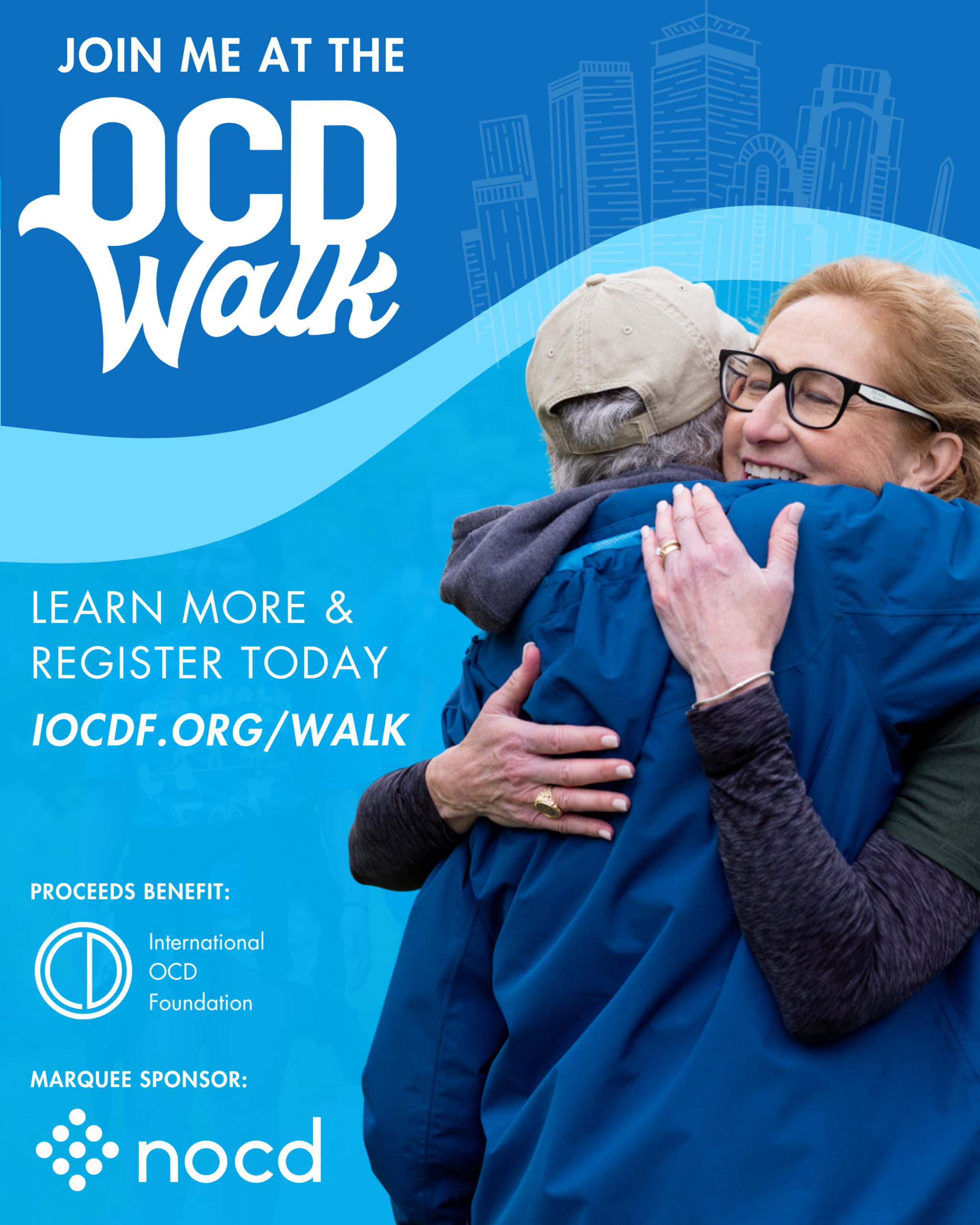
OCD Walks are happening throughout the rest of the year! Find a Walk near you and join the OCD community in raising awareness, building connection, and supporting the work of the IOCDF. Whether you walk, fundraise, or help spread the word, there are plenty of opportunities to get involved. Register for an OCD Walk near you.
Educate Yourself
OCD is a debilitating mental disorder that affects 1 in 40 adults in their lifetime and 1 in 100 children but is often overlooked and belittled as a personality quirk or choice. In reality, OCD is a very real disorder that affects people of all ages and walks of life.
Access Resources
Do you think you might have obsessive compulsive disorder (OCD)? Use our OCD screening tool to help determine if you (or a loved one) are experiencing OCD symptoms. Its confidential, quick, and free!
Contact elected officials about the issues
This #OCDweek, educate yourself on the latest information about bills in the US Congress that support the needs of the OCD and related disorders community. Your representatives and senators are considering these changes to public policy, and they need to hear from you about why they are so critical.
Make a difference by contacting your local officials about the issues important to you!
Pitch your local media about OCD Awareness
This #OCDWeek, help your community understand OCD by pitching your story or expertise to local media. Use our Media Action Center to identify outlets, craft a compelling email, and follow up effectively.
Make a difference by contacting reporters and editors in your area today and asking them to cover OCD Awareness Week.
OCD Awareness Events Calendar
Events
Calendar of Events
|
Sunday
|
Monday
|
Tuesday
|
Wednesday
|
Thursday
|
Friday
|
Saturday
|
|---|---|---|---|---|---|---|
|
0 events,
|
0 events,
|
0 events,
|
0 events,
|
0 events,
|
0 events,
|
0 events,
|
|
0 events,
|
0 events,
|
1 event,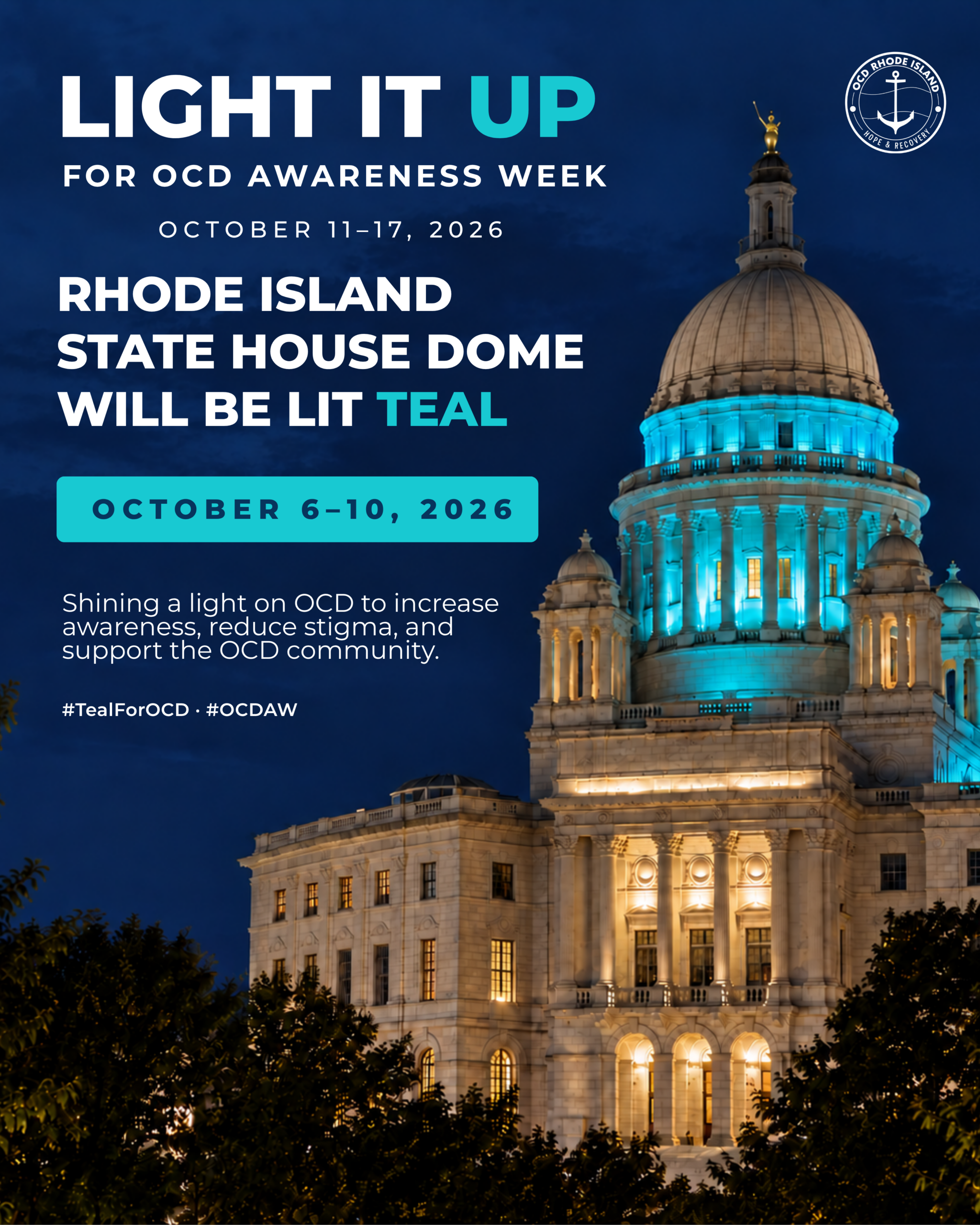
In honor of OCD Awareness Week (October 11–17, 2026), the Rhode Island State House dome will be illuminated teal from October 6–10, 2026 as part of the International OCD Foundation’s... Read more »
Free
|
2 events,
-
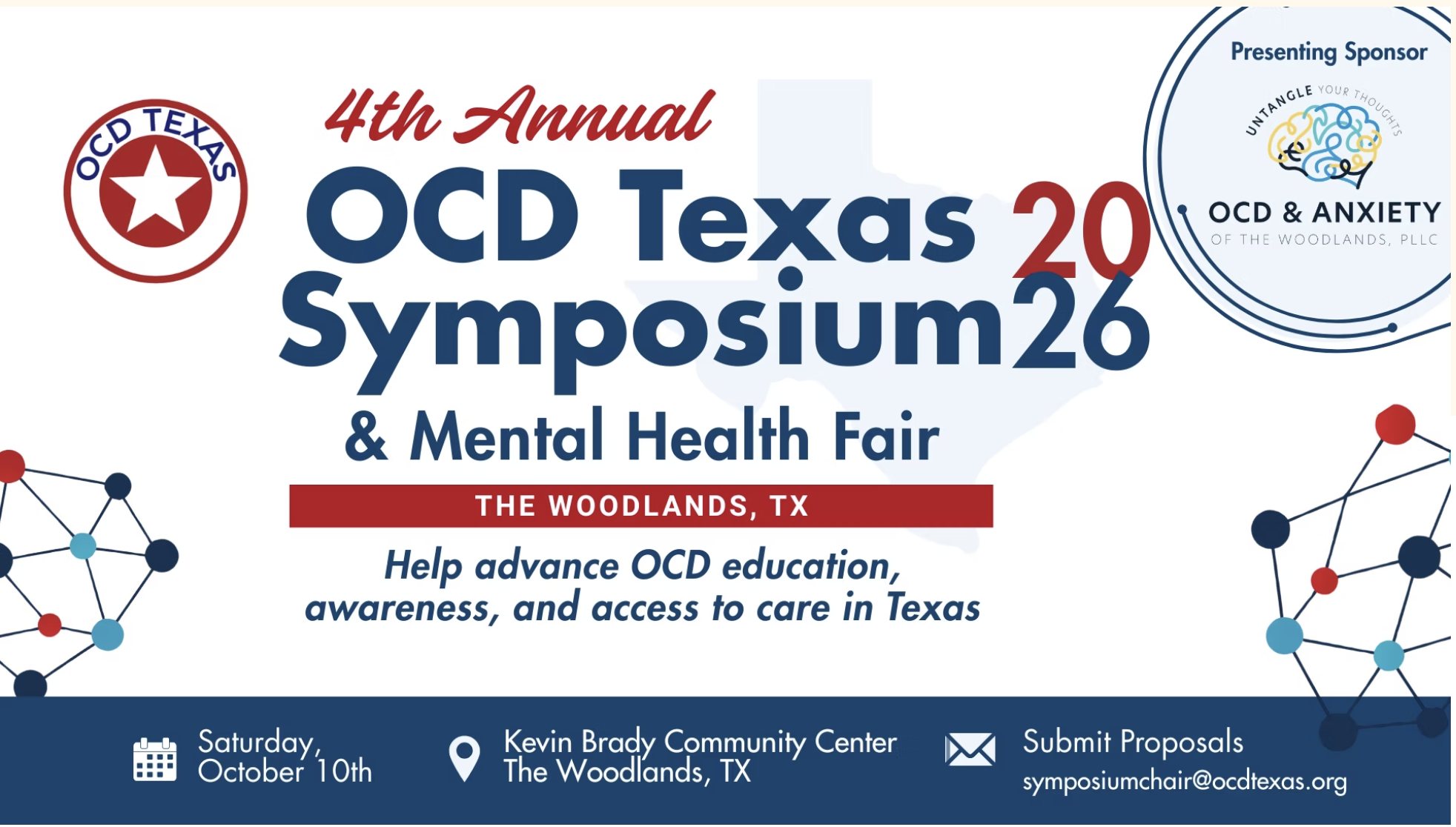
Join Us for the 2026 OCD Texas Symposium and Mental Health Fair! We are thrilled to announce the upcoming OCD Texas Symposium and Mental Health Fair! This event promises a... Read more »
$10.00
|
|||
1 event,
-
This event is to mark OCD Awareness Week 2026. The focus will be current efforts to characterise and bridge the treatment gap for obsessive-compulsive disorder (OCD) in Aotearoa and Australia.... Read more » |
1 event,
-
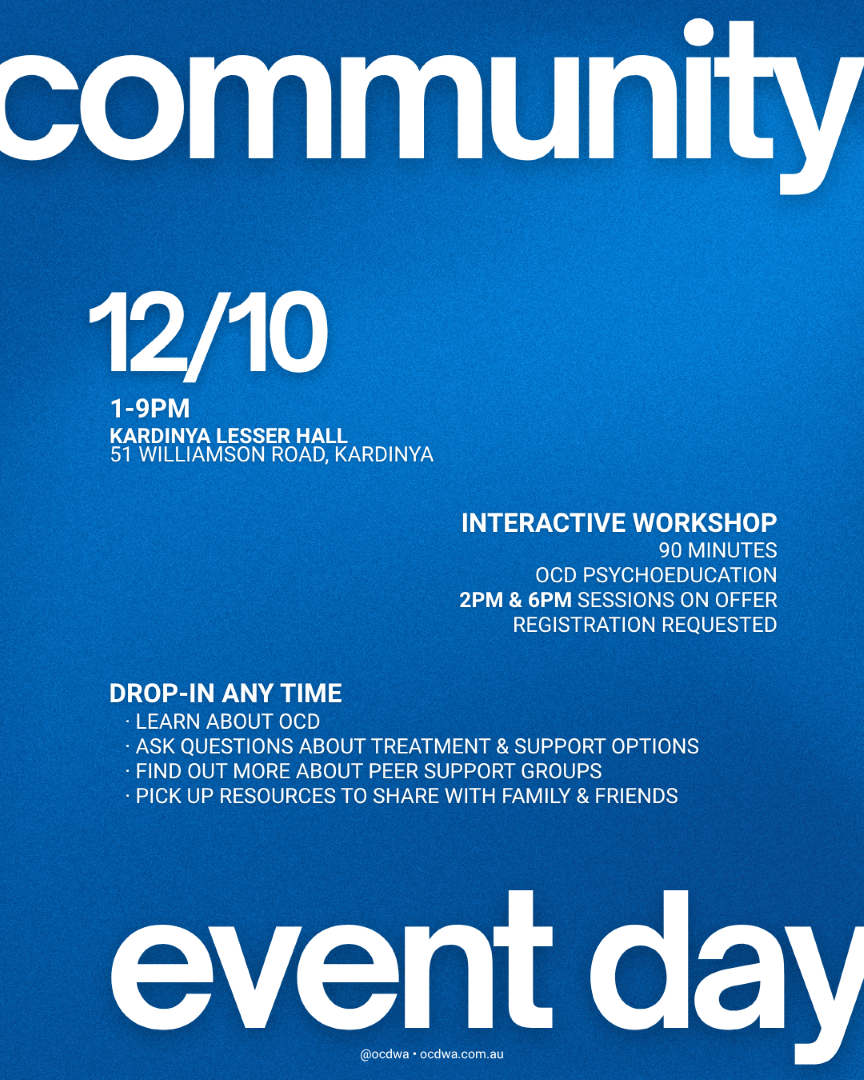
Join OCD WA for a Community Event Day focused on understanding OCD, reducing stigma, and building a sense of belonging for people with OCD and related disorders, their families and... Read more » |
2 events,
-
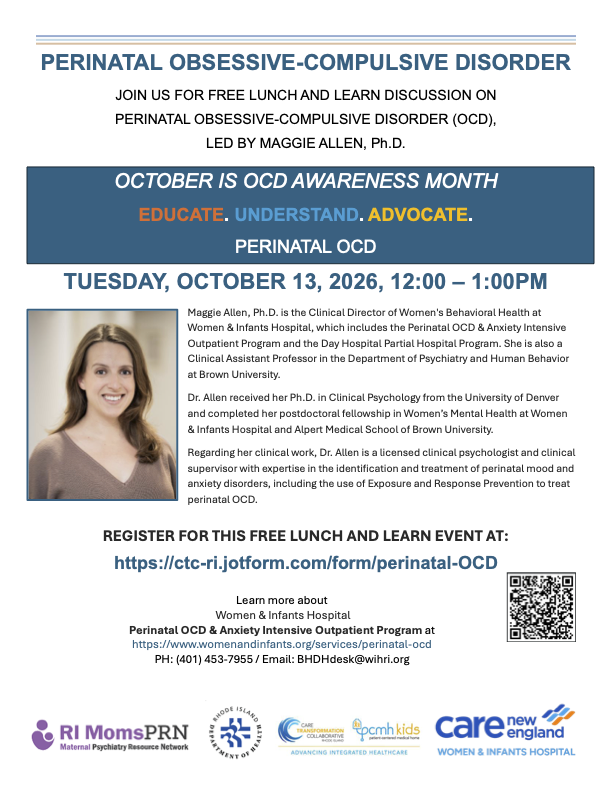
Join the Rhode Island Maternal Psychiatry Resource Network (RI MomsPRN) for a free virtual Lunch & Learn for providers focused on perinatal obsessive-compulsive disorder (OCD). This training will be led... Read more »
Free
-
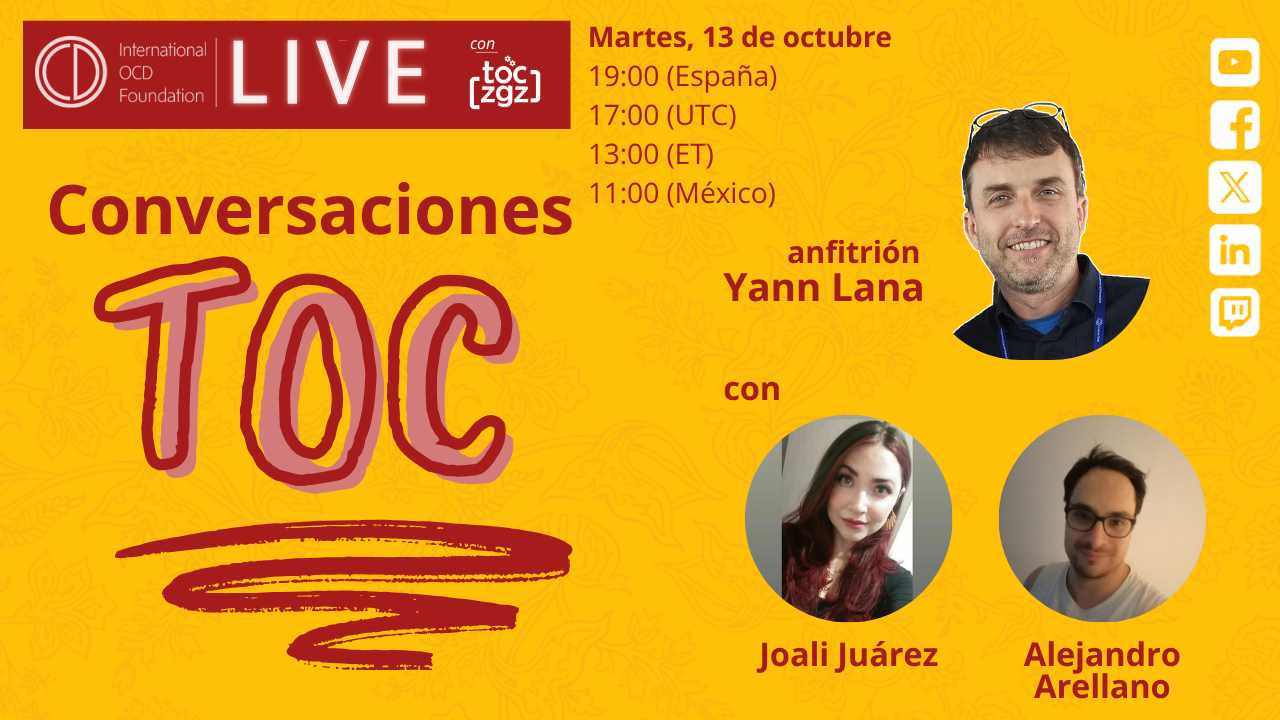
In this special Spanish-language livestream, IOCDF advocate and TOC Zaragoza board member Yann Lana will share experiences and raise awareness about OCD. You'll discover that you're not alone and that... Read more » |
0 events,
|
0 events,
|
1 event,
-

Come hang out for games and fun for an OCD Awareness Week SIG Hangout! Sign up to receive the Zoom link here: https://iocdf.org/special-interest-groups/lgbtq/ |
1 event,
-
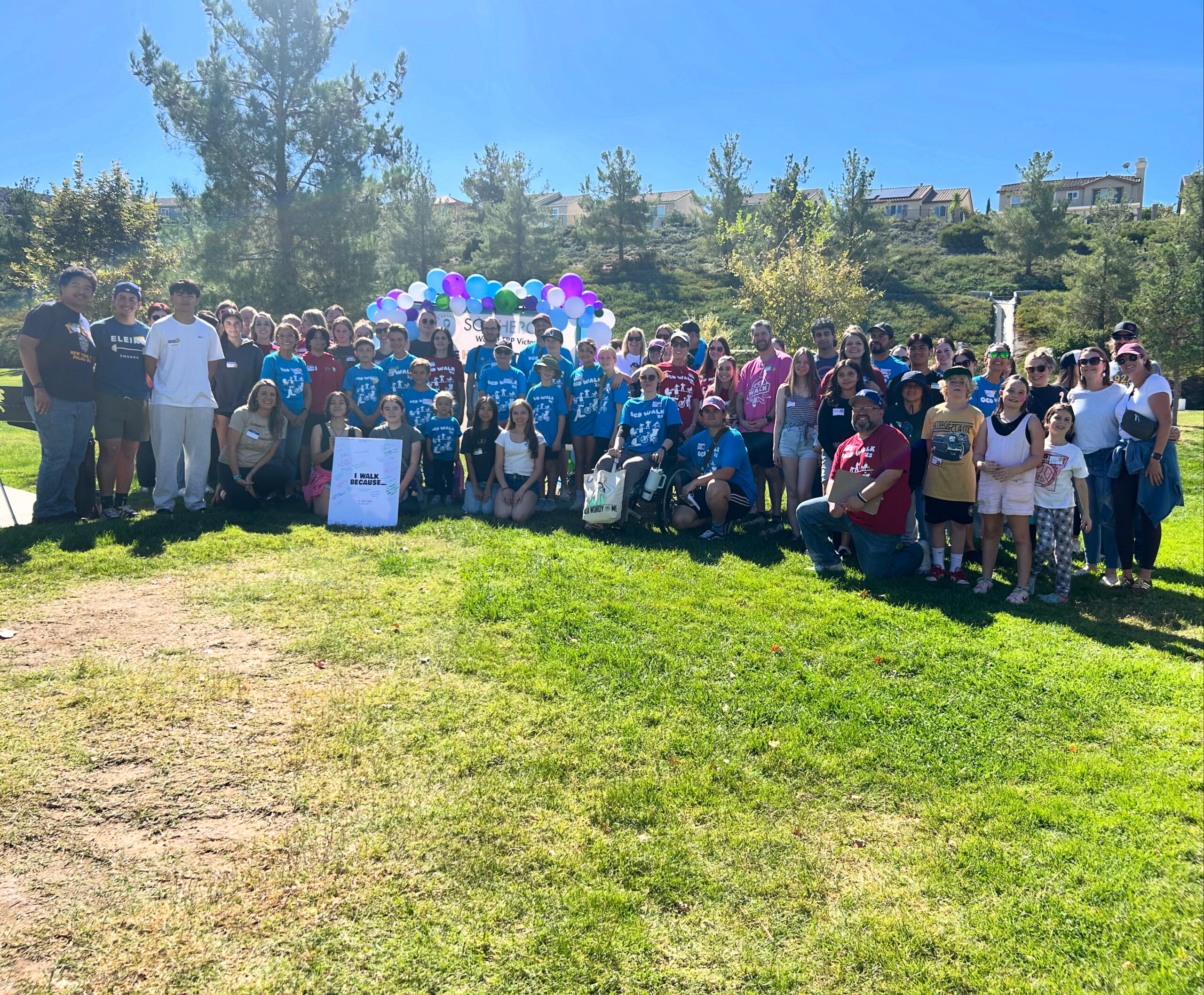
The 6th Annual Santa Clarita OCD Walk is a community engagement event that allows individuals to connect, share stories, create impact, and show those struggling on their road to recovery... Read more »
Free
|
1 event,
-
The Perth OCD Walk is a community engagement event that allows individuals to connect, share stories, create impact and show those struggling on their road to recovery that they are... Read more » |
1 event,
-
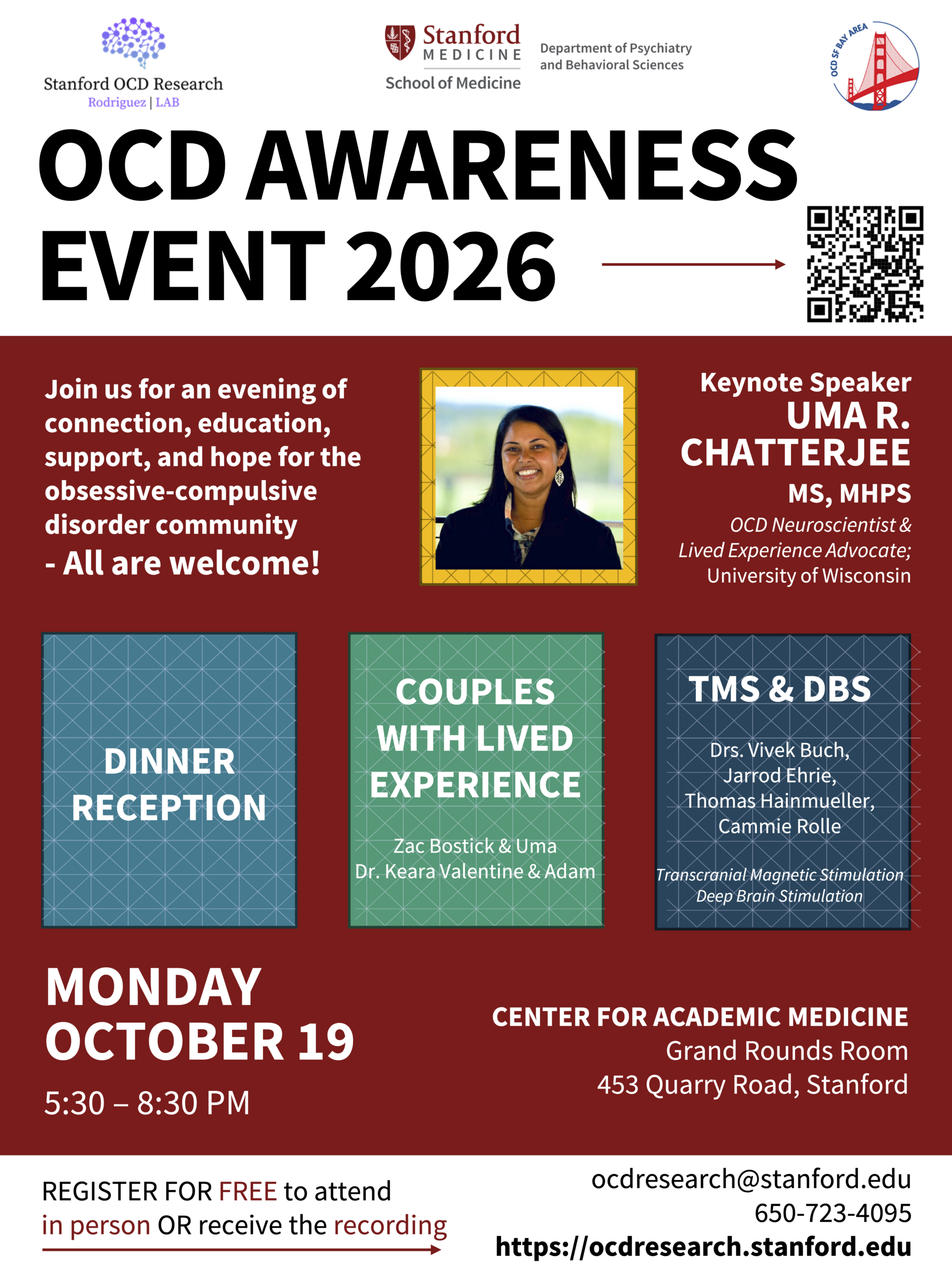
This 10th annual event brings together individuals with lived experience, researchers, and advocates for an evening of connection, education, and support. We are thrilled to welcome Uma R. Chatterjee, MS,... Read more »
Free
|
0 events,
|
0 events,
|
0 events,
|
0 events,
|
0 events,
|
1 event,
-

Whether you’re living with OCD, supporting a loved one, or simply want to help create a more understanding world, the OCD Walk is your chance to amplify a powerful message: recovery from... Read more » |
0 events,
|
0 events,
|
0 events,
|
0 events,
|
0 events,
|
0 events,
|